
Click to change. You are shopping at branch: 7124 NE St Johns Rd, Vancouver

Composite Decking Vs. Cedar Decking

2 min

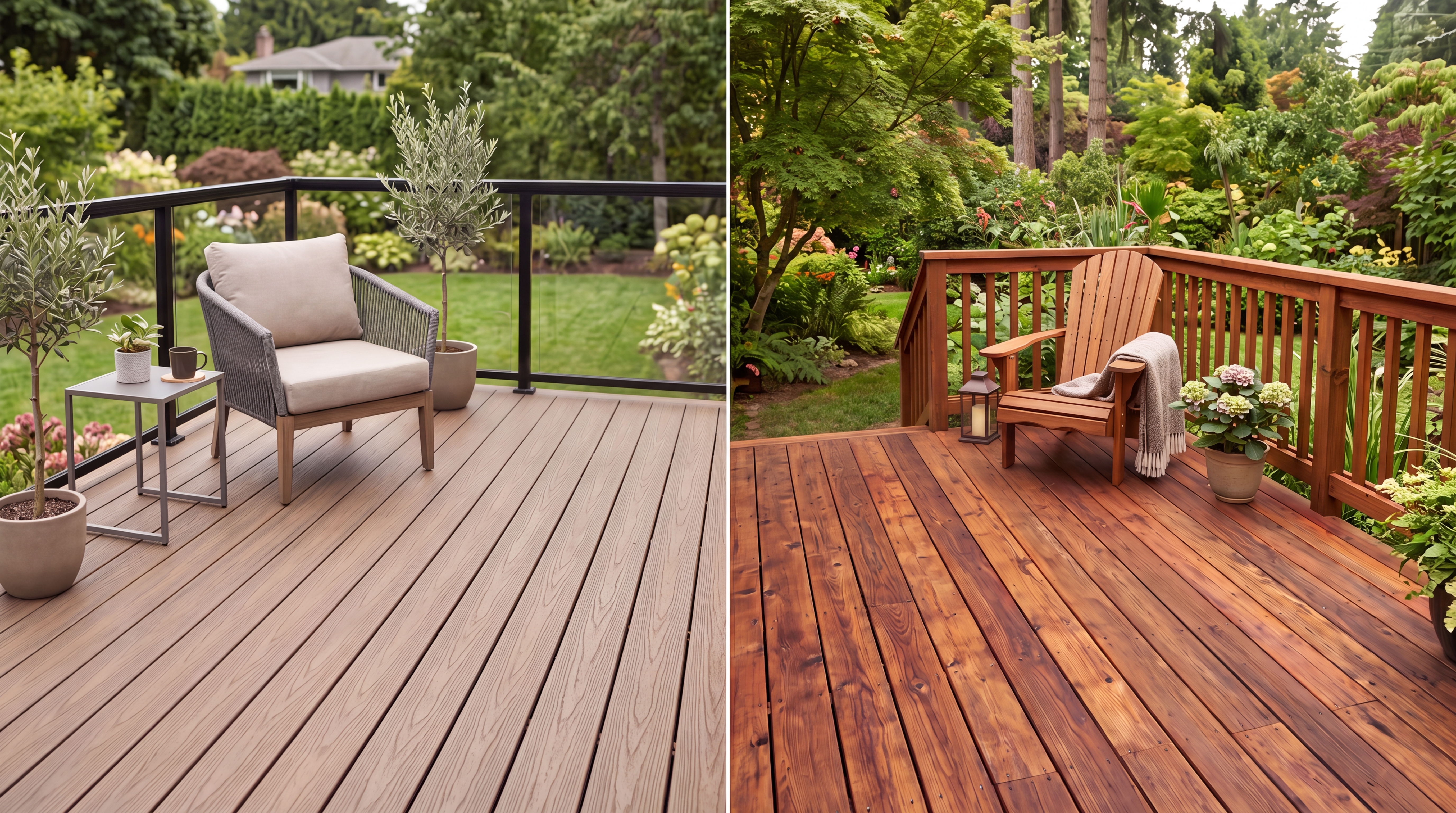
Cedar vs. Composite Decking: Which Is Right for Your Outdoor Space?


When planning a new deck, one of the first decisions homeowners face is choosing the right material. Cedar and composite decking are two of the most popular options — but they differ significantly in cost, maintenance, and longevity. Here's what you need to know before making your decision.


? Cedar Decking

Cedar is a natural hardwood prized for its beauty and workability. It has long been a go-to choice for outdoor projects, but it comes with important trade-offs.

âś… Pros

  • Natural aesthetic — warm, rich tones that look stunning when new
  • Eco-friendly — a renewable, biodegradable resource
  • Easy to work with — cuts and installs cleanly
  • Lightweight — less structural load on your framing

❌ Cons

  • Higher cost than expected — quality cedar lumber has risen significantly, and cedar now often costs more than entry-level composite decking
  • High maintenance — requires annual sealing, staining, or painting to prevent rot and warping
  • Shorter lifespan — susceptible to moisture, insects, and UV damage over time
  • Color fades quickly — will gray out without consistent upkeep

?️ Composite Decking

Composite decking is engineered from a blend of wood fibers and recycled plastics. Modern composite products have come a long way in both appearance and performance.

âś… Pros

  • Low maintenance — no staining or sealing required; just occasional cleaning
  • Long lifespan — most products carry 25–30 year warranties
  • Consistent appearance — resists fading, staining, and mold
  • Cost-competitive — entry-level composite options are often priced comparably to or lower than cedar, making it a strong value proposition

❌ Cons

  • Less natural appearance — though improving, some homeowners still prefer the look of real wood
  • Heat retention — composite surfaces can get hot in direct sunlight
  • Less eco-transparent — manufacturing involves plastic components, although some brands use up to 90% recyled plastics saving them from ending up in land fills.
  • Limited repairability — damaged boards are harder to spot-repair than wood

? The Cost Reality

Many homeowners assume cedar is the budget-friendly choice — but that's no longer the case.

With lumber prices remaining elevated, cedar decking frequently costs more per square foot than entry-level composite products. When you factor in the ongoing cost of maintenance (staining, sealing, and eventual board replacement), the total lifetime cost of cedar typically far exceeds that of composite decking.


? The Bottom Line

  Cedar Composite
Upfront Cost Higher than expected Competitive at entry level
Maintenance High Low
Lifespan 10–15 years (maintained) 25–30 years
Appearance Natural wood look Consistent, modern
Best For Short-term projects, DIY builds Long-term value, low upkeep

If you're looking for long-term value with minimal maintenance, composite decking is the clear winner for most homeowners. Cedar remains a viable option for those who love the natural wood experience and are committed to regular upkeep — but it's no longer the cost-saving alternative it once was.


Have questions about which decking material is right for your project? Contact our team today for a free consultation.

Composite Decking Vs. Cedar Decking

2 min

Cedar vs. Composite Decking: Which Is Right for Your Outdoor Space?


When planning a new deck, one of the first decisions homeowners face is choosing the right material. Cedar and composite decking are two of the most popular options — but they differ significantly in cost, maintenance, and longevity. Here's what you need to know before making your decision.


? Cedar Decking

Cedar is a natural hardwood prized for its beauty and workability. It has long been a go-to choice for outdoor projects, but it comes with important trade-offs.

âś… Pros

  • Natural aesthetic — warm, rich tones that look stunning when new
  • Eco-friendly — a renewable, biodegradable resource
  • Easy to work with — cuts and installs cleanly
  • Lightweight — less structural load on your framing

❌ Cons

  • Higher cost than expected — quality cedar lumber has risen significantly, and cedar now often costs more than entry-level composite decking
  • High maintenance — requires annual sealing, staining, or painting to prevent rot and warping
  • Shorter lifespan — susceptible to moisture, insects, and UV damage over time
  • Color fades quickly — will gray out without consistent upkeep

?️ Composite Decking

Composite decking is engineered from a blend of wood fibers and recycled plastics. Modern composite products have come a long way in both appearance and performance.

âś… Pros

  • Low maintenance — no staining or sealing required; just occasional cleaning
  • Long lifespan — most products carry 25–30 year warranties
  • Consistent appearance — resists fading, staining, and mold
  • Cost-competitive — entry-level composite options are often priced comparably to or lower than cedar, making it a strong value proposition

❌ Cons

  • Less natural appearance — though improving, some homeowners still prefer the look of real wood
  • Heat retention — composite surfaces can get hot in direct sunlight
  • Less eco-transparent — manufacturing involves plastic components, although some brands use up to 90% recyled plastics saving them from ending up in land fills.
  • Limited repairability — damaged boards are harder to spot-repair than wood

? The Cost Reality

Many homeowners assume cedar is the budget-friendly choice — but that's no longer the case.

With lumber prices remaining elevated, cedar decking frequently costs more per square foot than entry-level composite products. When you factor in the ongoing cost of maintenance (staining, sealing, and eventual board replacement), the total lifetime cost of cedar typically far exceeds that of composite decking.


? The Bottom Line

  Cedar Composite
Upfront Cost Higher than expected Competitive at entry level
Maintenance High Low
Lifespan 10–15 years (maintained) 25–30 years
Appearance Natural wood look Consistent, modern
Best For Short-term projects, DIY builds Long-term value, low upkeep

If you're looking for long-term value with minimal maintenance, composite decking is the clear winner for most homeowners. Cedar remains a viable option for those who love the natural wood experience and are committed to regular upkeep — but it's no longer the cost-saving alternative it once was.


Have questions about which decking material is right for your project? Contact our team today for a free consultation.

SEARCH ×

Search